
Checking for a Warrant in Concord
A Concord warrant search starts with where the record came from. Gather the full name, date of birth, any citation or case number, the issuing agency, and a rough court date. Then call Concord City Hall at 770-884-5221 and ask for the municipal-court or citation custodian. If staff confirm a warrant, ask which agency holds it and which court can change it. Georgia itself warns that asking about a warrant in person can lead to custody, so make the first call by phone or through a lawyer.
- Ask the Concord clerk whether a city citation or ordinance file exists and whether it is in FTA status.
- Ask whether a judge issued a bench warrant and what the court requires next.
- Call Pike County Sheriff at 770-567-8431 for county warrant and service confirmation.
- Use Probate or Magistrate Court if the Sheriff identifies one as the issuing court.
- Confirm any reset, appearance, payment, bond, surrender, or recall with that court or an attorney.
Concord City Clerk Warrant Contact
The official Concord government page names City Clerk Anita Neath and Deputy Clerk Stacey Jackson. City Hall sits at 50 Main Street, Concord, Georgia 30206, with mail going to P.O. Box 175. Call 770-884-5221, email cityclerk@cityofconcordga.gov, or visit Monday through Friday, 8 a.m. to 4 p.m. That page lists these contacts.
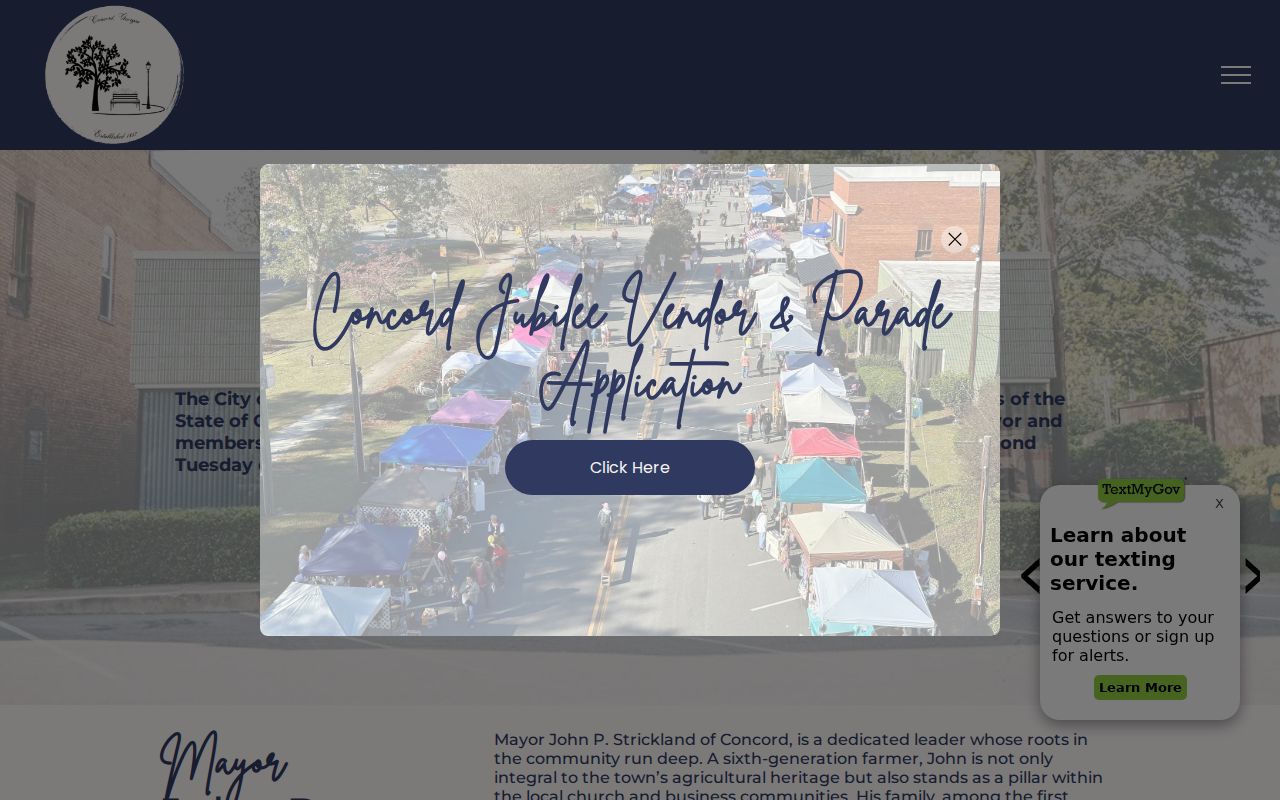
The Concord page supports a clerk-first records route, but it shows no police warrant desk, marshal, municipal-court calendar, or active-warrant list. So ask the clerk to name the right custodian. Do not assume the general city office decides warrant status.
Concord Police and Municipal Court
The city publishes no Concord police department page, municipal-court warrant desk, marshal contact, court calendar, dedicated warrant phone, bond amount, or recall form. That gap is real. Filling it with details from another Pike city would mislead you, and Georgia's statewide rule letting municipalities run traffic and ordinance courts and issue warrants does not tell you which Concord office holds a given file. For a city citation or a possible failure to appear, ask the city clerk for the court or citation custodian. If that office cannot confirm a warrant, call the Pike County Sheriff and ask which court owns the underlying record. The Sheriff serves criminal warrants countywide. The issuing judge or clerk controls court status. Keep the roles straight: service information is not a recall order, and a clerk's docket answer is no promise about when law-enforcement systems update.
Concord Government Window Payment
Concord links to Government Window for online payments. The vendor page asks for an email and password, a terms-and-conditions checkbox, robot verification, Log In, Forgot Password, Sign Up, and a one-time payment route. It offers no public name search, citation-status result, warrant indicator, or court recall order. It is a payment login only.
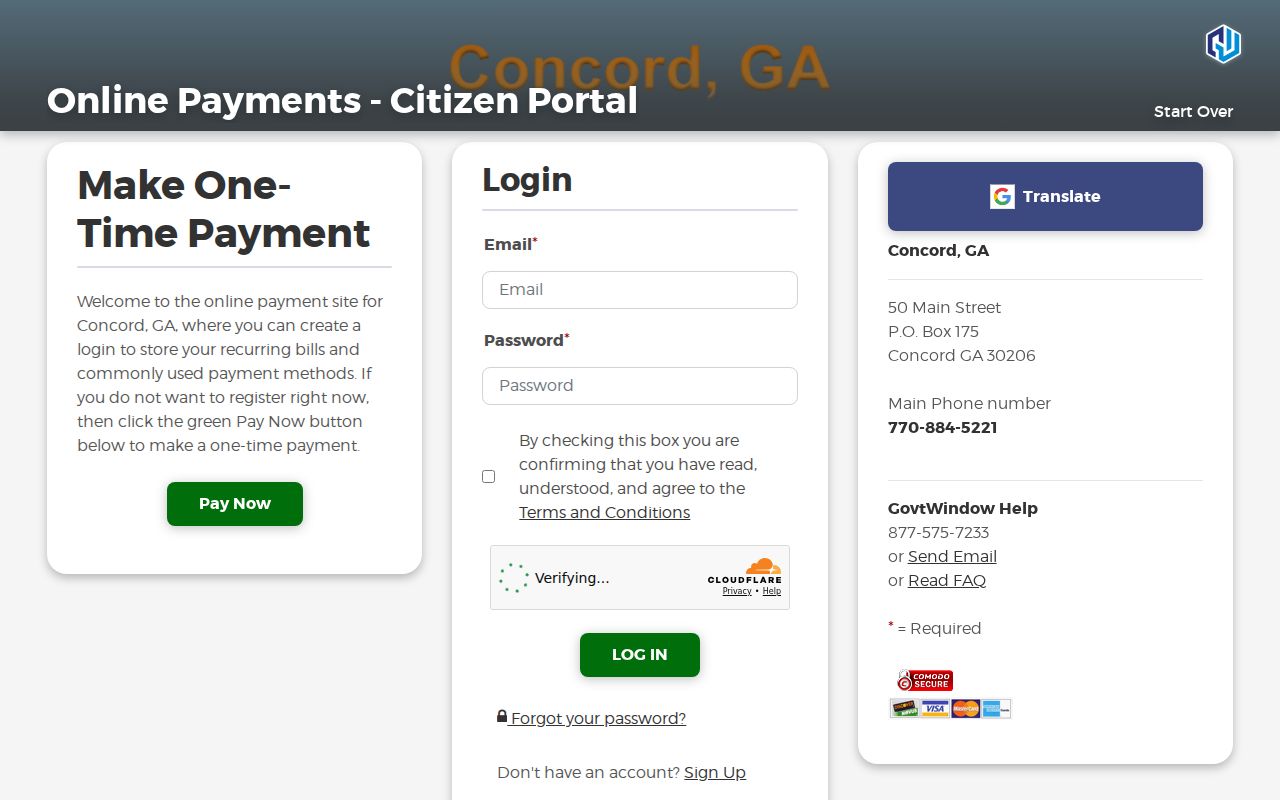
Use the vendor only for a payment the city confirms is proper. Ask the clerk whether payment resolves the balance, whether an appearance is still required, and whether a warrant exists at all. A receipt proves a transaction and nothing more; it cannot show that a judge recalled a warrant or that the Sheriff's service record changed.
Concord Warrant Types
A city matter in Concord may involve traffic, an ordinance, or a missed setting. A broader criminal case may instead belong to Pike Magistrate or Superior Court. Pike sources call the failure-to-appear process a bench warrant. They document no separate local capias-pro-fine program.
| Warrant Type | How It Arises | Who Issues It |
|---|---|---|
| Traffic warrant | Unresolved Concord citation or required court event | The city court assigned to the matter |
| Ordinance warrant | Unresolved city-code proceeding | The responsible municipal court |
| FTA bench warrant | A person misses a scheduled setting | The court assigned to the case |
| Arrest warrant | Probable cause supports arrest for an alleged offense | Magistrate or another competent court |
A search warrant authorizes a search. It is not an arrest-status record. Ask the custodian to use the exact label in the Concord file.
Concord Payment Is Not Clearance
In Concord, paying and clearing a warrant are not the same thing, and the only visible online route is a payment login rather than a case-status search. Before paying, identify the case and court. Ask whether the balance can be paid online, whether a mandatory appearance was missed, whether FTA status exists, and whether a bench warrant was actually signed.
Three separate confirmations: amount paid, court warrant status, and Sheriff service status.
After the transaction, keep the receipt and call the custodian. Ask whether a judge's recall is required, the effective date of any order, and when the change reaches law enforcement. If the FTA touched a driver's license, ask what disposition the court transmits and how reinstatement works. Neither Concord nor Pike publishes a single update interval for every system. So recheck before treating a payment as a completed resolution.
Inside a Concord Warrant Record
No public sample Concord warrant entry, city field list, or number pattern exists. Ask the custodian to read the actual city or county record and match more than a shared name. The vendor login fields describe an account, not a warrant record.
| Warrant / Cause Number | The court’s actual file identifier; no Concord format is published. |
|---|---|
| Subject Name | The legal name connected to the case, compared with date of birth. |
| Charge / Offense | The traffic, ordinance, or criminal allegation in the docket. |
| Issuing Court | The named city court or Pike County court. |
| Bond / Fine Amount | Only the current amount stated by the court or Sheriff. |
| Status | The exact active, served, recalled, or disposed term in the file. |
Also ask about the Concord warrant's issue date, missed event, next setting, and availability of a written disposition or recall.
No Concord Warrant Portal
Concord publishes no online warrant search. There is no citation lookup field, no online bond schedule, no amnesty program, and no stated update cadence for any city record. Do not read that gap as good news. A blank payment account or a missing webpage proves nothing about an open municipal or county warrant, so treat a Concord warrant check as a phone task. Go straight to the offices that know. Ask the Concord clerk which office keeps the city file, ask the Sheriff whether a warrant awaits service, and ask the issuing court for the current docket status. If you need a copy, request the existing citation, warrant, return, docket entry, or disposition. Don't ask the city to build an all-warrants database; that is not its job. For arrest-sensitive questions, a status call or an attorney inquiry beats waiting on a public-records response.
How Concord Warrants Fit the County System
Concord incorporated in January 1887, runs on a mayor-council government, and counted 378 residents in the 2020 Census. City matters start at the city level. Ordinary county traffic belongs to Pike Probate. Magistrate Court hears warrant applications, first appearances, bond and preliminary matters, and certain lower-court cases. The Superior Clerk keeps felony and misdemeanor criminal filings, including warrants and bond forfeitures, while the Sheriff serves criminal warrants.
Warrant flow: Concord city custodian › Pike County Sheriff › issuing Pike County court
Georgia runs no public statewide warrant database. For Concord and the rest of the county, follow Pike County warrant records and the county warrant lookup for the sequence. Only the issuing court can give the decisive status and recall terms.
Concord Clerk and Court Routing
Magistrate Court's traffic-routing guidance lays out three paths. A Concord traffic ticket normally belongs to the city court. An ordinary county citation goes to Probate Court. Once a warrant has also issued, Magistrate becomes the relevant court. For Concord drivers, that split matters more than the online payment screen, because it identifies who can actually answer the legal-status question. Ask the Concord clerk whether the citation is a city matter and who keeps its court record. County traffic? Call Probate at 770-567-8734. If a warrant moved the case to Magistrate, call 770-567-2004 and ask about criminal extension 207. If the Sheriff points to a Superior criminal file, call 770-567-2000, extension 2. During each call, note the office, file number, exact warrant term, next date, and instructions. Do not drive to the county courthouse until the responsible office confirms where the person should report.
Concord Warrant Records and Public Access
Send a city-file request to the Concord office that holds the record, and send a county-file request to the appropriate Pike office. Describe an existing Concord record. Include a reasonable date range plus the case or citation number. Sealed, juvenile, protected, and active-investigation material can be withheld or redacted. If any part is withheld, ask for the statutory basis and any segregable public part.
Key Rules:
Georgia Open Records Act, O.C.G.A. §§ 50-18-70 et seq. - existing public records are generally available unless exempt.
O.C.G.A. § 17-4-40 - a judge may issue an arrest warrant after probable cause is established.
O.C.G.A. §§ 15-11-58 and 15-11-59 - juvenile court and law-enforcement records are generally confidential, subject to exceptions.
Confirming Concord Warrant Recall
Start any Concord recall question with the issuing court. Ask for the case number. Ask for the exact warrant status, any appearance or bond requirement, and the person authorized to confirm a recall. The Concord clerk can route a municipal record, and the Sheriff can answer service questions, but neither role carries the judge's authority. If custody is a real possibility, talk to a lawyer before appearing. After a reset, payment, appearance, bond, surrender, or recall, get written proof if it is available. Confirm the effective date and when the order will reach the serving agency. Match the subject through name, date of birth, file number, and court, never name alone. A no-record answer from Concord covers only the records searched there; it cannot clear Pike County, another Georgia county, or another state. Keep receipts, docket copies, and notes of each call, then recheck with the court and Sheriff, because no common update cadence is published.
If the Concord case began as a traffic ticket, ask separately whether a failure-to-appear notice or license consequence remains. The court's disposition may need to reach another agency before that record changes. If it began as a criminal allegation, ask whether a first appearance is scheduled, whether a bond condition applies, and whether a Superior Court file exists. A payment account will not show those facts. Tie each answer to its source: the Concord custodian for the municipal file, the issuing clerk for the docket, and the Sheriff for service. A careful closeout file for a Concord matter holds the original citation or notice, the payment receipt, the new court date, the recall or disposition, and the dates both the court and law enforcement confirmed the change. Those records cut the confusion if an old status appears later.